
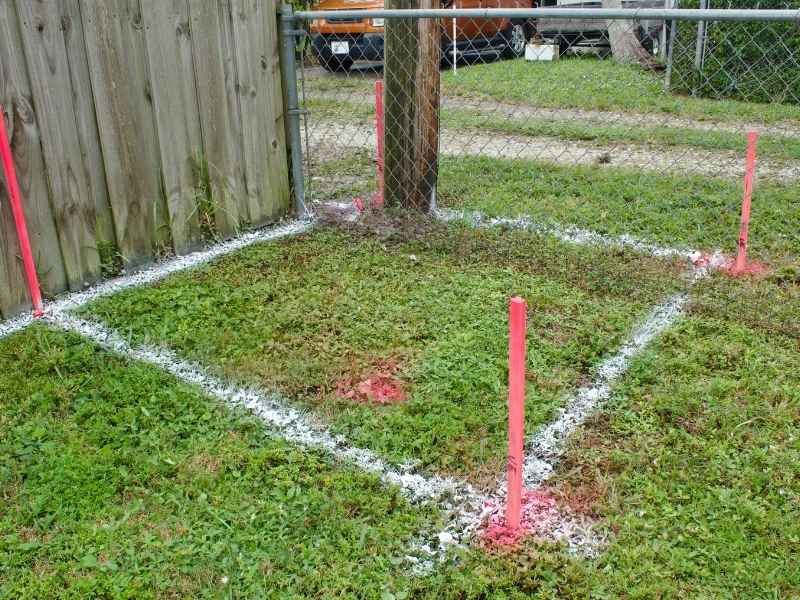
A plat of survey places two important details on the same page. First, it shows your building’s actual footprint. Second, it maps the recorded easement lines taken from public records.
The surveyor measures exactly where your house, garage, or shed sits, then plots the easement edges right beside it. When those details are compared with the property line, the relationship between the structure, the easement, and the rest of the parcel becomes much clearer. You can see whether a wall or a corner extends into the easement strip.
The survey plat also shows how far the structure extends into that area, whether that’s a few inches or several feet. Either way, you finally have the answer in writing instead of a guess.
Why Older Improvements May Not Match the Easement Layout
Easements usually go in early, back when developers first laid out the land, sometimes decades ago. At that point, the lot may have been mostly empty.
Over the years, owners add features. One builds a garage. Another puts up a carport or a back porch. Whoever built them may never have checked the easement lines.
As a result, a structure can end up in a location the easement never accounted for. Older properties run into this often. The land changed, yet the recorded easement stayed the same.
Whether the Building Predates the Easement Matters
The sequence of events can shift the entire picture. In some cases, the building went up first, and the easement came later, wrapping right around it. In others, the easement came first, and someone built over it years afterward.
Determining which came first helps explain how the conflict developed. It can also affect your rights and options, so this detail is worth pursuing.
Old property records help you piece together the timeline. Review permits, past surveys, deed history, and the recorded easement date. A surveyor or title researcher can help you sort out what happened and when.
The Easement Document May Reveal More Than the Survey Drawing
The plat shows where the easement runs, while the recorded easement document explains what it’s actually for. These are two separate things, and you need both.
Pull the original easement from county records and read it closely. Check the width, the purpose, and who holds the right to enter. Some easements cover utility lines, while others cover drainage or shared access.
Don’t skip the finer details either. Look for maintenance provisions and any right to remove structures that block access. The lines on the survey plat won’t spell out your obligations, but the language in the document will.
What Happens When Future Work Involves the Same Easement Area
A building over an easement can sit quietly for years without anyone noticing. The issue resurfaces the moment you decide to change that structure.
Suppose you plan to repair, rebuild, expand, or replace it. Permit reviews may flag the easement at that point. The easement holder might also require access, or object to new work in that space.
This is where your plat of survey proves its worth. It gives everyone a clear record of the existing conditions before the project begins. Bring it early to the surveyor, the utility, or the city, and you’ll catch problems before they stall your build.
Frequently Asked Questions
What is an easement on a plat of survey?
An easement is a legal right that lets someone else use part of your land. It commonly covers utility lines, drainage, or shared access. On a plat, the surveyor marks the easement as a defined strip or line. That way, you can see exactly where it crosses your property.
Can I keep a building that sits over an easement?
Often the answer is yes, though not always. The easement’s purpose and the rights it grants determine the outcome. The holder may allow the structure to stay, or may ask you to remove it. Speak with a surveyor, title company, or attorney to understand your real options.
Who do I contact if my plat shows an easement problem?
Start with the surveyor who prepared the plat, since they can explain what the drawing shows. Next, a title company or real estate attorney can review the recorded easement and your rights. For a utility easement, the utility company may need to weigh in as well. Involving the right people early will save you stress later.
Does a building over an easement lower my property value?
It can, particularly if it concerns a buyer or a lender. Some buyers walk away from surprises like this one. Others accept it once they understand the easement’s terms. A clear plat and a careful review help you explain the situation and protect your value.
Will I have to move a structure that crosses an easement?
Possibly, though not in every case. The easement holder decides whether the structure can remain in place. If they need full access, they may ask you to move or remove it. Get advice from a surveyor and an attorney before you assume the worst or spend money.
