
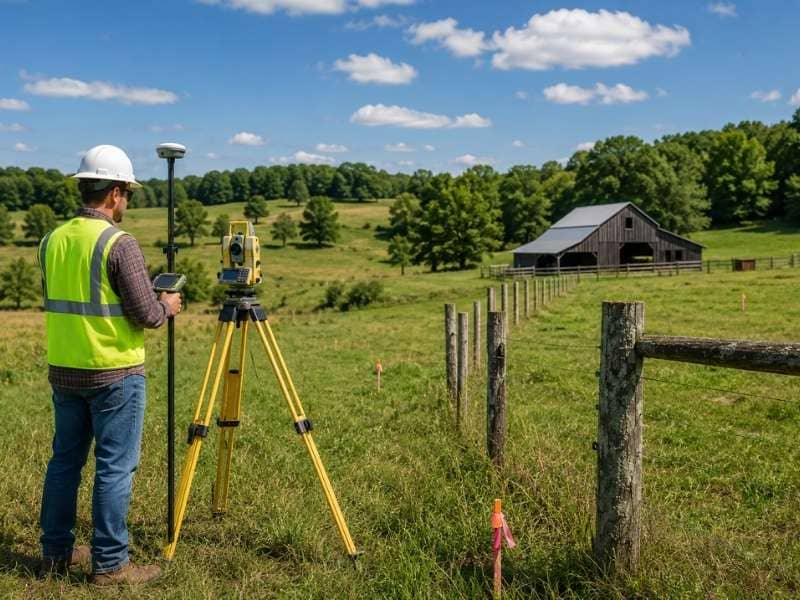
Buying rural acreage is different from buying a house in a subdivision. The land is bigger, the boundaries are less obvious, and the details that matter most don’t show up in a listing. Land surveying gives buyers a clear picture of what they’re actually purchasing before the closing date arrives. Skipping it on rural property is one of the more expensive mistakes a buyer can make.
Check Property Lines Before You Buy
Rural properties often have long boundaries that run through wooded areas, across fields, or along creeks. Without a survey, buyers have no way to know exactly where those lines are. A listing may show a rough acreage number, but it won’t tell you where one owner’s land ends and the next one begins.
A land surveying professional places markers at the boundary corners and produces a map showing the exact lines. That information tells buyers what they’re getting and protects them if a neighbor ever questions where the property ends. On rural land especially, confirmed boundary lines are worth far more than assumptions.
Find Out if Anyone Else Has Rights to Use the Land
Owning land doesn’t always mean exclusive use of every part of it. Easements give other people or organizations legal rights to cross or use portions of a property. Utility companies may have the right to run power or gas lines through the land. A neighbor may have a recorded right to use a shared road that crosses the property. Access easements can affect where a buyer can build and what changes they can make.
A survey identifies these rights and shows where they sit on the property. Some easements are narrow and have little impact on everyday use. Others run through the most useful parts of the land and significantly affect future plans. Buyers deserve to know about all of them before closing, not after.
Make Sure Fences and Buildings Are in the Right Place
Rural properties often have fences, barns, sheds, storage buildings, and other structures. The important question is whether all of those features sit inside the property lines. Not every fence follows the actual boundary. Not every barn was placed with a survey in hand.
A land survey shows exactly where existing structures sit relative to the property lines. If a fence cuts inside the true boundary, the buyer may be getting less land than they think. If a barn sits partially outside the property line, it becomes a problem at closing or later when the buyer tries to sell. Finding these issues before closing gives buyers and sellers time to resolve them without pressure.
Confirm the Size and Features of the Property
An acreage number in a listing is a starting point. A survey gives buyers the verified measurement. On rural land, the difference between what a listing says and what a survey finds can sometimes be significant, especially on older parcels where the deed description hasn’t been checked against modern measurements in years.
Beyond the acreage, a survey can show features that affect how the land can be used. Creeks and drainage corridors affect where buildings can go. Wooded sections, open fields, and changes in terrain affect how the land performs for farming, hunting, or development. Knowing where those features sit on the property helps buyers plan realistically before they close.
Use Survey Results to Help With Closing
A completed survey is useful for more than just the buyer. Lenders often require a survey before approving financing on rural acreage. Title companies use survey information to confirm that the title is clear and that there are no boundary or encroachment issues that could affect the transaction. Having an accurate, current survey ready early in the process keeps things moving.
When survey results reveal an issue, addressing it before closing is far easier than addressing it after. A boundary discrepancy, an undisclosed easement, or a structure outside the property lines can all be worked through when there’s time and room to negotiate. Waiting until the last minute leaves buyers with fewer options and more pressure to accept terms they might otherwise question.
Frequently Asked Questions
Why is land surveying important before buying rural land?
A survey shows buyers where the property lines are, how much land they’re actually getting, and whether any easements or boundary issues could affect the property after closing.
Do I need a new land survey if the seller already has one?
Possibly. An older survey may not reflect recent changes to the property, new structures, or updated boundary information. A current survey gives buyers verified data based on present conditions.
Can land surveying show if there is a shared road or easement?
Yes. A survey identifies easements, shared access roads, and utility corridors that give other parties legal rights to use part of the property. Buyers should know about these before closing.
How long does land surveying take for rural acreage?
It depends on the size of the property and the terrain. Larger or heavily wooded tracts take more time to survey than smaller, open parcels. A surveying professional can give a time estimate based on the specific property.
Is land surveying worth it for vacant land?
Yes. Undeveloped land can still have boundary questions, easement issues, or structural encroachments from neighboring properties. A survey gives buyers the information they need to make a confident decision.
