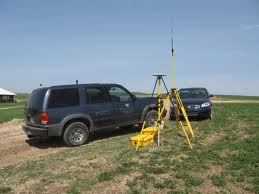
Welcome to Enterprise Land Surveying

Featured

Welcome to Enterprise Land Surveying's website

This site is intended to provide you with information on Land Surveying in the Enterprise, AL, Coffee and Dale Counties, and Geneva County area of Alabama. If you're looking for an Enterprise Land Surveyor, you've come to the right site. If you'd rather talk to someone about your land surveying needs, please call  (888) 936-8426 today. For more information, please continue to read.

enterprise land surveyingLand Surveyors are professionals who measure and make precise measurements to determine the size and boundaries of a piece of real estate.  While this is a simplistic definition, boundary surveying is one of the most common types of surveying related to home and land owners. If you fall into the following categories, please click on the appropriate link for more information on that subject:
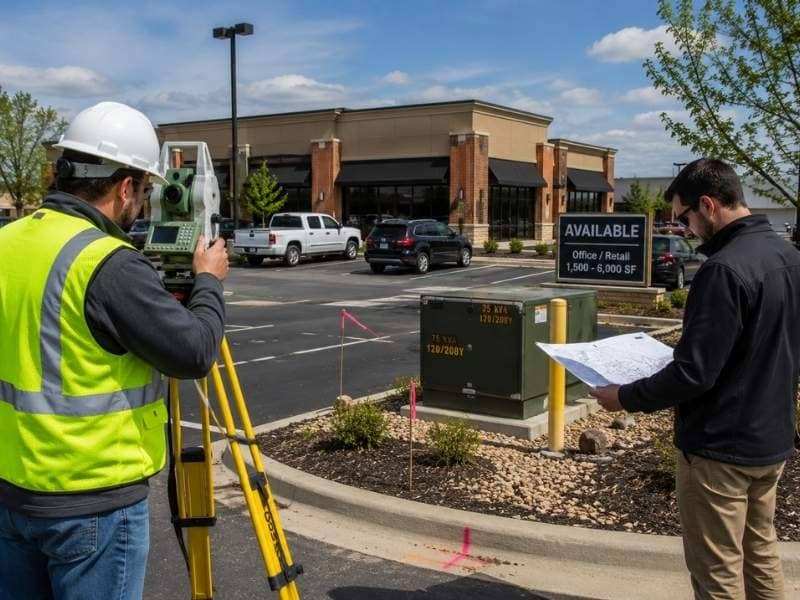
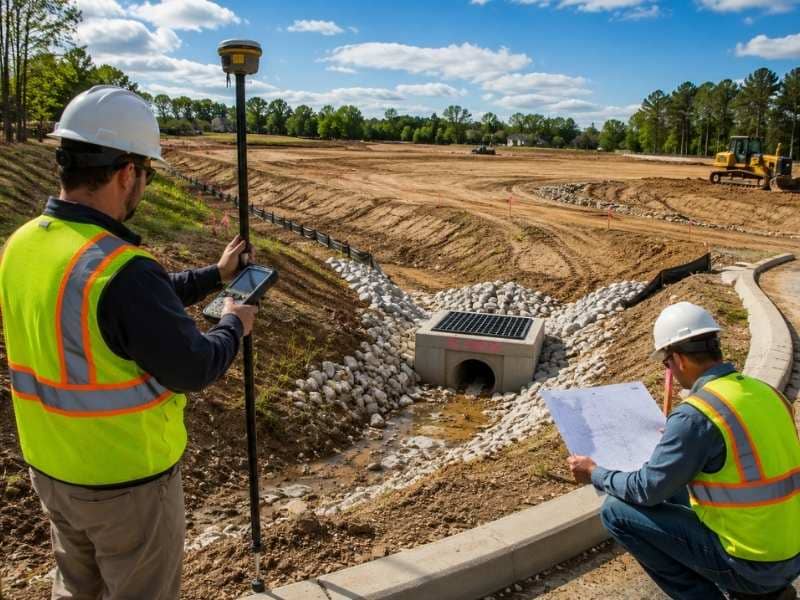
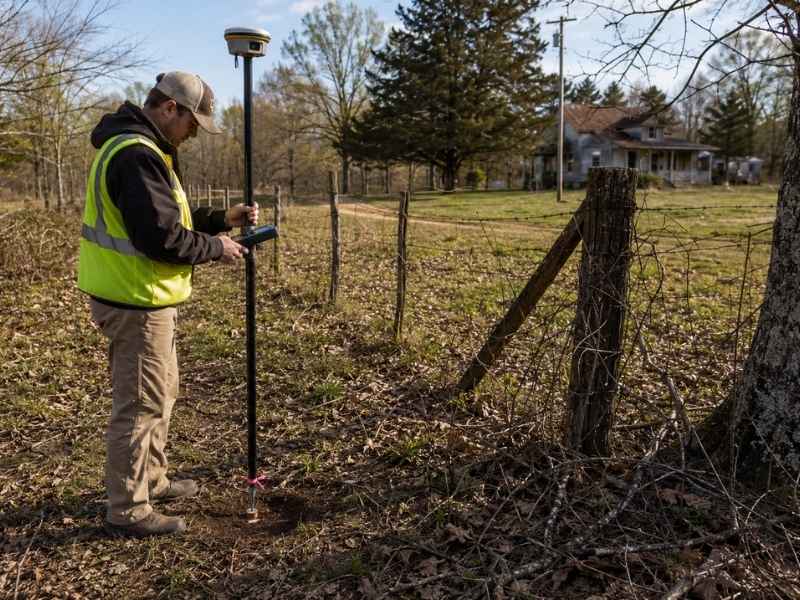
Enterprise Land Surveying services:

  1. I need to know where my property corners or property lines are. (Boundary Survey)
  2. I have a loan closing or re-finance coming up on my home in a subdivision. (Lot Survey)
  3. I need a map of my property with contour lines to show elevation differences for my architect or engineer. (Topo Survey)
  4. I've just been told I'm in a flood zone or I 've been told I need an elevation certificate in order to obtain flood insurance or prove I don't need it. (Flood Survey)
  5. I'm purchasing a lot/house in a recorded subdivision. (Lot Survey – See Boundary Survey)
  6. I'm purchasing a larger tract of land, acreage, that hasn't been subdivided in the past. (Boundary Survey)

If your needs don't fall into one of the above, don't worry, we'll get to the bottom of it. CALL Enterprise Land Surveying TODAY at (888) 936-8426 OR better yet, fill out a Contact Form request to discuss your survey needs.

Survey Mapping Mistakes That Cost Developers Money

Surveyor reviewing plans and conducting survey mapping before site development begins

Most development projects don’t fail because of bad design or slow contractors. They stall because of bad survey mapping. A missed easement, a wrong boundary call, or an old base map can add weeks to a schedule and thousands to a budget before a single foundation is poured.

Survey mapping errors are common. They’re also preventable. Here’s what developers get wrong most often, and what it costs when those mistakes reach the field.

Ordering the Wrong Type of Survey for the Job

Not all surveys produce the same output. A lot survey and a topographic survey answer different questions. Ordering the wrong one wastes time and money, and it still leaves a gap in what your team needs.

Developers who skip the topographic survey and go straight into site design often find their grading plan doesn’t match the actual ground. The redesign costs more than the topo survey would have. On sloped or uneven sites, this mistake hits hard because every contour line affects where utilities go, where drainage flows, and where the building can sit.

Before ordering any survey, confirm with your engineer and architect which documents they need. Get that list in writing.

Using Outdated Survey Maps as the Base for Design

An old survey is not a current survey. A plat from ten years ago doesn’t show the fence a neighbor built six years ago, the widened driveway, or the rerouted utility line.

Developers who pull an old survey from the title file and hand it to their design team are taking a real risk. If conditions on the ground have changed, the design is built on wrong information. That problem shows up during construction, not during design. By then, fixing it costs far more.

If a survey is more than a few years old, or if anything has changed on the property or nearby parcels since it was done, order a new one. The cost is small compared to a mid-project correction.

When Lenders Flag Survey Age

Lenders and title companies have their own rules on how old a survey can be. Many won’t accept one older than six months to a year. If you’re working toward a construction loan, confirm the acceptable date range early. Finding out at closing that your survey is too old is a delay that didn’t need to happen.

Skipping the Records Research Phase

Survey mapping starts in the office, not in the field. A surveyor who goes straight to the site without pulling deed records, prior surveys, and recorded easements is doing partial work.

Records research finds problems a field visit can’t see. An access easement recorded in 1987 leaves no mark on the ground. A gap in the chain of title has no visible sign at the property corner. These issues only come out when someone looks for them in the public record.

Developers who push surveyors to skip deep research to save time often pay more later. A title issue that surfaces after closing becomes the developer’s problem to fix, and that fix is slow and expensive.

Survey Mapping Errors in Boundary Placement

Wrong boundary placement is the most costly survey mapping mistake on active construction projects. If a boundary line is off by even a few feet, structures end up in the wrong place, setbacks get violated, and neighboring parcels get affected.

This error is more common on sites where original survey monuments are missing or damaged. When a surveyor can’t find original markers, they have to rebuild the boundary from record documents and nearby evidence. That takes experience and careful work. Rushed jobs on tight deadlines produce poor results.

What Happens When a Boundary Is Wrong

A building placed over a property line or inside a neighbor’s setback doesn’t stay there. The municipality can require removal. The adjacent owner can take legal action. Title insurance may not cover the full cost if the survey that caused the problem was done improperly.

Fixing a boundary error after construction starts costs far more than getting it right before any digging begins. Require your surveyor to locate or set physical monuments at every corner before design work starts.

Not Verifying Easement Locations Before Site Design

Easements limit what you can build and where. A developer who doesn’t know exactly where an easement falls on a parcel before designing a building footprint will likely need to redesign after the survey maps it.

Utility easements, drainage easements, and access easements all remove buildable area. Some are narrow and easy to work around. Others cut through the most useful part of a lot. The design team needs that information at the start, not after a permit gets rejected.

Ask your surveyor to locate and map all recorded easements as part of the survey scope. Don’t rely on a deed reference alone. A deed may list an easement by book and page number without showing where it physically sits on your lot.

Treating Survey Mapping as a One-Time Step

Survey mapping is not just a pre-construction task. Some projects need updated surveys at more than one stage: before design, before permit submission, after rough grading, and after construction is complete.

An as-built survey at the end of a project shows what was actually built versus what was planned. Municipalities and lenders often require it before issuing a certificate of occupancy or releasing final loan funds. Developers who don’t plan for this step early are sometimes surprised by it at the worst possible time.

Build survey requirements into your project schedule from the start. Talk to your surveyor at the beginning about every survey document the job will need from start to finish.

Frequently Asked Questions

What is the most common survey mapping mistake on development projects? 

Using an outdated survey as the base for site design is the most common and costly mistake. Conditions on the ground change over time. A survey that doesn’t reflect current conditions will produce a design that doesn’t match reality in the field. Ordering a new survey at the start of every project prevents this.

How do survey mapping errors affect construction loans? 

Lenders require current, accurate surveys before funding. If survey errors come up during the lender’s review, the loan can be delayed. Boundary problems, missing easement disclosures, or surveys that don’t meet current standards can all trigger extra requirements that slow the closing process.

Can a developer be held liable for a survey mapping error? 

A developer who builds based on a survey they knew was outdated or incomplete takes on real liability. If that survey leads to an encroachment, setback violation, or title defect, the developer may face legal claims from adjacent owners, lenders, or the municipality. Always use a current, properly sealed survey from a licensed professional.

How does skipping records research affect a survey? 

Records research is how a surveyor finds easements, title gaps, and recorded restrictions that have no physical sign on the ground. A survey done without thorough records research is incomplete. These issues don’t disappear when they’re missed. They show up during permit review or title search.

When should a developer order an as-built survey? 

Order an as-built survey after construction is complete but before the final inspection. Most municipalities and lenders require it as part of project closeout. Planning for it at the start of the project, rather than treating it as a surprise at the end, keeps the schedule on track.

What an ALTA Survey Reveals Beyond Property Lines

 Aerial view comparing vacant land with a detailed site development plan showing lot layouts, roads, drainage features, and property improvements identified during an ALTA survey

A property can look perfect on paper. The lot appears large enough. The location works. The price makes sense. Then a survey reveals a utility easement running through the middle of the planned building site. Suddenly, the project needs a redesign.

This is why developers pay close attention to ALTA Survey.

Many people think an ALTA Survey only confirms property boundaries. It does much more than that. It can reveal rights, restrictions, improvements, and site conditions that may affect how a property can be used.

For developers, these details can help avoid delays, redesigns, legal disputes, and unexpected costs. Before purchasing land or moving forward with a project, understanding what an ALTA Survey reveals can make a big difference.

Property Lines Are Only the Starting Point

Property boundaries are important, but they only tell part of the story.

A parcel may have clear boundary lines and still contain issues that affect development. An ALTA Survey combines field measurements with title records and other documents to provide a more complete picture of the property.

This extra information helps developers identify risks before construction begins.

Unlike a basic boundary survey, an ALTA focuses on matters that may impact ownership, access, financing, and development plans.

Easements That Affect Future Development

One of the most valuable parts of an ALTA Survey is the identification of easements.

An easement gives another party certain rights to use part of the property. These rights can limit where structures may be built.

Utility Easements

Utility companies often have easements for power lines, water lines, sewer systems, gas lines, and communication infrastructure.

A building, parking lot, or retaining wall may not be allowed within these areas.

Discovering a utility easement after design work has started can create expensive changes.

Access Easements

Some properties rely on shared driveways or access routes.

An ALTA Survey can show where these access easements exist and who has the right to use them.

This information helps developers understand how vehicles and pedestrians can legally enter and leave the site.

Drainage Easements

Drainage easements allow water to move through designated areas.

Building within these areas can create permit problems and drainage concerns.

An ALTA Survey helps identify these restrictions before construction plans are finalized.

Encroachments That Create Risk

Encroachments are another issue that often appears during an ALTA Survey.

An encroachment occurs when a structure crosses a property line or enters an easement area.

Examples include:

  • Fences
  • Retaining walls
  • Driveways
  • Buildings
  • Parking areas

Sometimes the encroachment belongs to a neighboring property. Other times it originates from the property being surveyed.

Either situation can create legal and financial concerns.

A developer who discovers an encroachment before closing has more options than one who discovers it after construction starts.

ALTA survey being performed on a residential property while homeowners observe the survey process

Recorded Rights and Restrictions

An ALTA Survey may also reveal rights and restrictions that affect the property’s future use.

These items are often found within title documents and public records.

Rights-of-Way

A right-of-way allows specific parties to travel across part of a property.

This right may belong to utility companies, government agencies, neighboring owners, or others.

The location and size of a right-of-way can affect site design.

Building Restrictions

Some properties have recorded restrictions that limit certain activities or improvements.

These restrictions may affect building placement, access points, parking layouts, or future expansion plans.

Understanding these limitations early can prevent costly revisions later.

Access Concerns

Legal access is not always as straightforward as it appears.

An ALTA Survey can help identify situations where access rights may be limited or unclear.

For developers, legal access is often a critical part of project planning and financing.

Improvements Located on the Property

An ALTA Survey documents many visible improvements located on the site.

This information helps developers understand existing conditions before making investment decisions.

Existing Buildings

The survey shows where buildings are located in relation to property boundaries and easements.

This information helps identify potential conflicts.

Parking Areas and Site Features

Parking lots, sidewalks, signs, utility structures, and other improvements are commonly shown on an ALTA Survey.

These features can affect redevelopment plans and site layout options.

Setback Concerns

Local regulations often require structures to remain a certain distance from property lines.

Survey information helps identify situations where improvements may be too close to those boundaries.

Finding these issues early allows developers to address them before they become larger problems.

ALTA Survey Information That Helps Lenders

Lenders frequently request ALTA Surveys during commercial real estate transactions.

They want to understand any conditions that could affect the property’s value or future use.

A lender evaluating a development site needs more information than simple boundary locations.

Easements, encroachments, access rights, and restrictions can all influence lending decisions.

An ALTA Survey helps provide that information.

It also reduces uncertainty during the due diligence process.

Why Hidden Issues Cost More Than Survey Costs

Many development problems begin with information that was not discovered early enough.

An easement may force a building redesign.

An encroachment may require legal action.

An access issue may delay permits or financing.

The cost of correcting these problems often exceeds the cost of obtaining an ALTA Survey.

Identifying potential concerns before closing gives developers more time to evaluate options and make informed decisions.

When an ALTA Survey Makes the Most Sense

An ALTA Survey is often used for:

  • Commercial property purchases
  • Development projects
  • Refinancing transactions
  • Large land acquisitions
  • Properties with complex title histories
  • Sites requiring lender review

In these situations, a basic understanding of property boundaries is rarely enough.

Developers need a broader view of the property and the issues that may affect future plans.

The Value of Knowing More Before You Build 

Property lines are only one part of the story.

An ALTA Survey can reveal easements, encroachments, access rights, improvements, rights-of-way, and recorded restrictions that may affect a property’s future use.

For developers, this information helps support better decisions before purchasing land, securing financing, or beginning construction.

Finding issues early is usually easier and less expensive than dealing with them after a project is underway.

Topo Surveyors Make Topographic Maps

Topo Surveying and Topo Surveyor

topo surveyorA Topographic Surveyor also known as a Topo Surveyor collects the survey data to locate man-made and natural marks and its elevations on a particular portion of land. The topo surveyor normally includes any man-made underground marks such as utility lines, if they are marked in advance. It will also illustrate ground level installations such as utility poles, buildings, walls, and many other significant improvements.

The utilization of standard topographic surveying procedures (not those shown in this image) are commonly employed to provide a precisely measured plan of the terrain. This method also includes the mapping and drawing phases of projects to document the locations and layout of the improvements, road, buildings, and many other engineering and architectural projects in the construction industry.

Why Hire a Topo Surveyor?

The purpose of getting a Topo Surveyor to do a topographic survey is to obtain an accurate map and documentation of the present state of a parcel of land that will be constructed on; either a building, a wall, or any other construction activity. The design engineers make use of the topo survey as they plan the design and then the proposed final surface.

It is important to have this plan as this allows the Engineer to compute, analyze, and estimate the amount of earthwork that might be required. The Engineer will also be able to balance the amount of earth work to minimize the dirt to be taken off or onto the construction site. An architect may also make use of the topo survey the same way as the Engineer.

Additionally, the architect may plot the surface in 3D to picture the finished look with the improvements he might add. This plot may be presented to the contractor, building owner, or the land owner before the actual construction takes place. An accurate topo survey is a big help to ensure the installations and improvements fit within the site boundaries.

Common Methods that a Topo Surveyor use

topo surveyorThe two common methods of doing a topographic survey are Aerial Topo Survey and Ground Based Topo Survey. How the topographic survey is done would vary depending on the size of the project and the contour interval desired. It is important that a topo surveyor understand how to carry out both in any circumstances. Choosing the proper method, based on the project requirements is an important decision that the topo surveyor should be able to help with. Having been involved in both types of topo surveys will allow the topo surveyor to make use of the most appropriate method.

An Aerial Topographic Survey is done from a point above the ground surface using either a plane, helicopter, un-manned aerial vehicle, or a crane to get the aerial camera above the ground.  The distance above the ground is determined by the precision needed for the topo survey. Aerial photos of the ground surface are then taken and examined by a photogrammetrists who does the mapping from these stereo pairs of photos. By looking at the two overlapping aerial photos, the improvements and breaklines are gathered.

A Ground Based or Conventional Topographic Survey is done when there is a need to get more precise contours and spot elevations or if the site is small.  The Aerial Topographic Survey is limited in the precise vertical and horizontal point location on the ground surface. This a somewhat simplified discussion of the two methods of completing a topographic survey. While this is an overview, you should read and research more if you desire to learn in depth about topographic surveys. Or, just talk to a topo surveyor.

If you need a Topo Survey completed, please call Montgomery Land Surveying today at (334) 625-9540  or fill out a contact form request for more information concerning your land surveying needs.