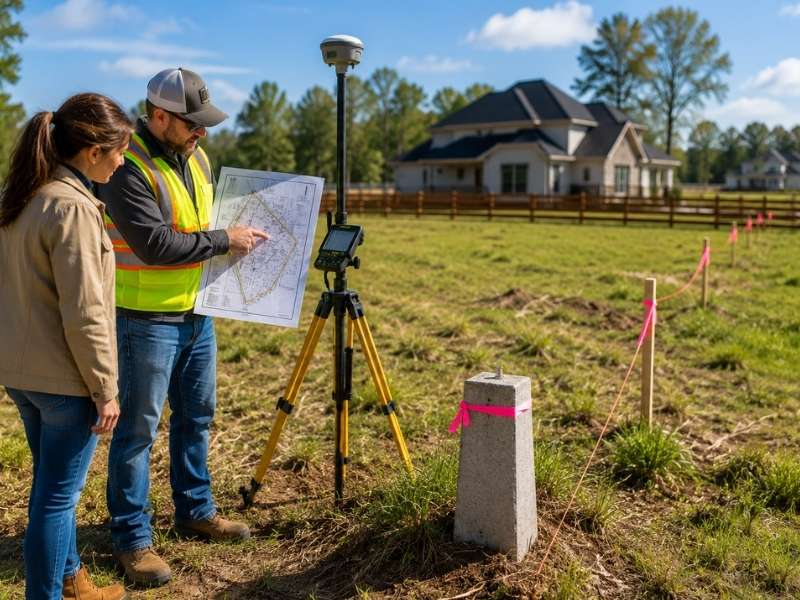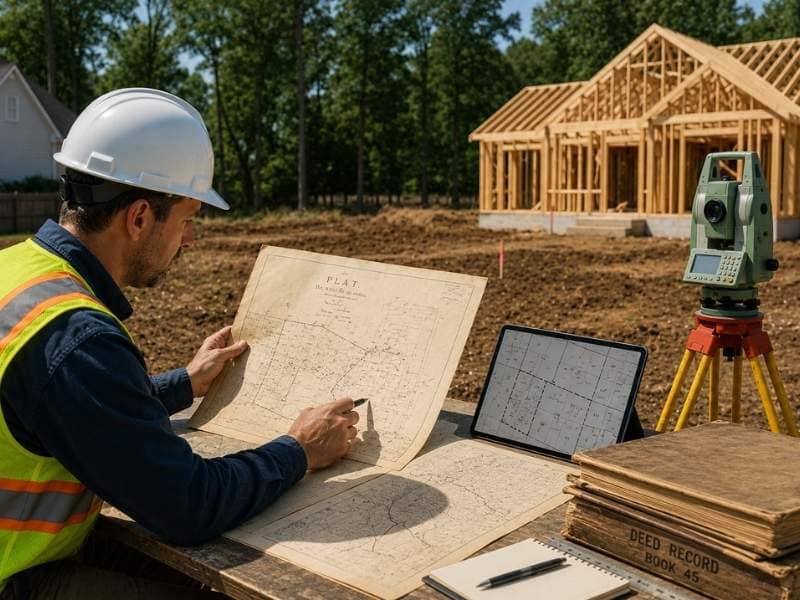
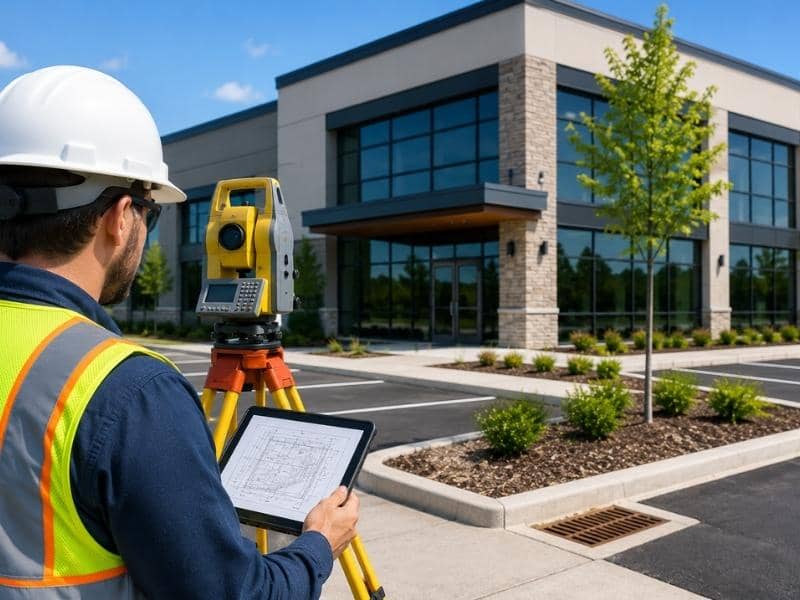
Plans show how a project is supposed to turn out. Real construction does not always follow the plan exactly. An as-built survey is the record of what was truly built. It shows where things sit and how they differ from the original drawings. It is the final, measured picture of a finished project. For owners, builders, and local offices, that record settles questions long after the crew leaves.
What an As-Built Survey Is
An as-built survey is a record a surveyor makes after the work is done. The surveyor visits the finished site and maps where everything ended up. The result is a drawing that shows reality, not just the plan that started the job. It becomes the real record of how the project came together.
A typical as-built survey can record:
- The final position of buildings and structures on the lot
- Driveways, walkways, and parking in their finished spots
- Utility lines and connections in their installed positions
- Grading, drainage features, and finished ground heights
- Setbacks and distances from the property lines
Each of these can shift during construction. The survey pins down the real numbers so no one has to guess later.
Where the Build Differs From the Plan
Almost no project ends exactly as drawn. A wall moves a foot to clear a pipe. A slab shifts to dodge bad soil. A utility takes a different route than planned. These small changes add up. The old drawings no longer match the site. The survey records each change so the paperwork tells the truth.
This matters more than it looks. A future contractor who trusts the old plans could dig in the wrong spot. They might design around a wall that is not there. With an accurate as-built, everyone works from what is real. That saves time, money, and a lot of frustration down the road.
Underground and Utility Records
Some of the most useful survey data is the part you cannot see. Once a crew fills a trench, the pipes and lines below vanish from view. The survey records where those utilities run before the dirt covers them. That map can save a crew from cutting a line years later.
Water, sewer, power, and drainage all meet the real ground during the build. Their final paths rarely match the drawings down to the inch. Recording the true spots protects the next project and the people who dig for it. It is far cheaper than finding a line the hard way.
Confirming the Work Meets the Approved Plan
The survey also checks that the finished project follows the approved rules. It shows whether the building kept its required distance from each line. It confirms that nothing crossed an easement or went past the approved footprint. Local offices often want this proof before they close a permit.
Catching a problem here is far better than catching it later. If a structure sits too close to a line, the owner wants to know now. A future sale is the wrong time to find out. The survey turns a vague hope into a documented fact. That record can head off a dispute years before it starts.
A Record That Pays Off Later
An as-built survey keeps working long after the project ends. When an owner plans an addition, the survey shows what is already there. When a buyer or lender has questions about the build, the answer is on file. A clear record turns hard questions into simple ones.
Maintenance gets easier too. A leak, a repair, or a new connection all go smoother when the survey maps the lines and structures. Instead of opening the ground to find out, a crew can check the survey first. One accurate record can save many headaches over the life of a property.
Frequently Asked Questions
What does an as-built survey include?
An as-built survey includes the final spots of buildings, paving, utilities, grading, and property lines. It records the project as crews actually built it, not as it first appeared on the plans. The result is a clear record of the finished site.
How is an as-built survey different from the original construction plans?
The original plans show the planned design before any work begins. An as-built survey shows the real result after construction. It includes any changes made along the way. One is the goal, and the other is the proof of what happened.
When is an as-built survey done?
A surveyor completes an as-built survey once construction is finished, or at the end of a major phase. By then the structures, paving, and utilities are in their final spots. That timing lets the survey capture the true, final state of the site.
Does an as-built survey show underground utilities?
Yes, recording utility locations is one of its most useful jobs. Surveyors capture where pipes and lines run, ideally before crews cover the trenches. That map helps future crews avoid cutting a line by accident.
Who needs an as-built survey?
Owners, builders, engineers, lenders, and local permit offices all rely on as-built records. Each one needs proof of how and where a project came together. The survey gives them a single trusted source for those facts.
Is an as-built survey required to close out a project?
On many projects, yes. Local offices often want one before they sign off. It confirms the finished work matches the approved plan and rules. Even when it is not required, it is a smart record to keep.