
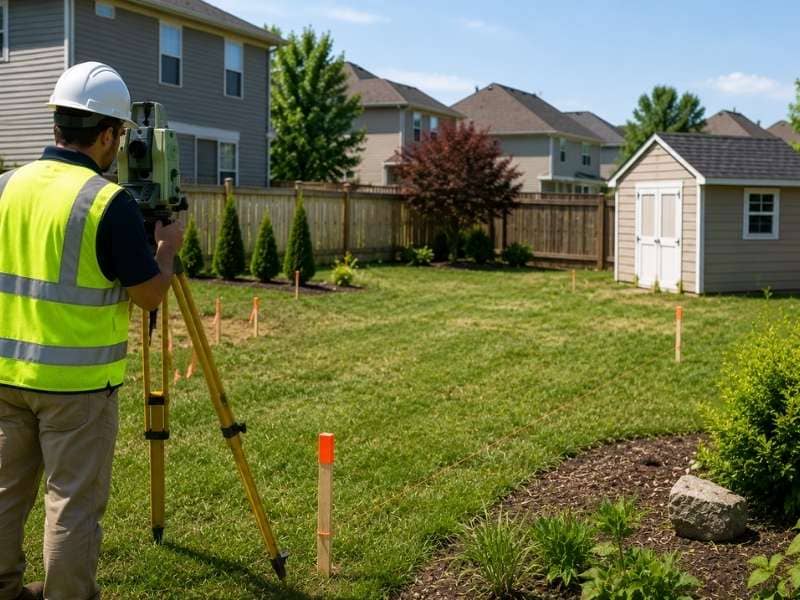
Most homeowners don’t think about a survey until a project is already started. By then, the delay had already begun. A residential land survey done before construction can catch problems early. Missing corners, unclear lines, old records, and permit requirements can all stop a project. Finding these issues early is much easier than dealing with them after a contractor is already scheduled.
Missing Corner Markers Can Stop a Project Before It Starts
Corner markers show exactly where property lines meet. On older lots, those markers are often gone. Original iron pins or concrete posts set when the neighborhood was first built can get buried, paved over, or removed during yard work over the years.
When corners are missing, homeowners have no way to know exactly where their property lines are. Building a fence without confirmed corners means guessing. A fence built even a few inches onto a neighbor’s property creates a problem that costs time and money to fix. A residential land survey finds or replaces those corners so the project starts in the right spot.
Neighbor Disagreements About Property Lines Can Cause Delays
Disagreements between neighbors about where a boundary sits happen often. One homeowner thinks the line runs along an old fence. The neighbor has a different idea based on something a prior owner told them. Neither of those is a legal answer, and when one of them tries to build, the conflict shows up fast.
A residential land survey gives both sides something real to work from. It shows where the line is based on official records and field measurements. Starting a fence or addition without that information is a risk that often causes delays when a neighbor pushes back mid-construction.
Local Rules Can Limit Where a Structure Can Go
Local rules set minimum distances that structures must sit from property lines. These are called setbacks. A fence might be allowed close to the line, while a shed or addition needs to sit several feet back. Some homeowners associations have their own rules on top of local ones.
Without a current survey, homeowners don’t know exactly where their lines are. That makes it hard to confirm whether a planned structure meets the required distances. A survey gives the exact line locations needed to plan the project correctly. This helps avoid a permit rejection because the structure was placed too close to the line.
Old Property Records Can Point to the Wrong Location
Many residential lots have deeds and survey records that are very old. Some older records use reference points that no longer exist. A tree used as a corner marker may be gone. A road mentioned in the deed may have been moved years ago.
Relying on old records without checking them can send a project in the wrong direction. A homeowner who builds based on an old map may find out later that the information didn’t match current conditions. A current residential land survey checks what’s on the ground today against the recorded description. It finds any gaps before they become construction problems.
Missing Survey Documents Can Slow Down a Permit
Some permit applications require survey information before they move forward. A city or county building office may ask for a site plan that shows confirmed property lines. A homeowners association may need survey details before approving a new structure. Without a current survey, the application stalls while the homeowner tries to get one under time pressure.
Having a current residential land survey ready before submitting a permit saves time. It gives the reviewing office what it needs to process the application without sending it back. That can save weeks on a project that already has a contractor scheduled and materials ordered.
Frequently Asked Questions
What is a residential land survey?
A residential land survey shows where property lines and corners are located on a lot. It gives homeowners verified measurements based on field work and official records.
Why do I need a residential land survey before building a fence?
A survey confirms exactly where the property lines are so the fence gets built in the right place. Without it, there is no reliable way to know if the fence crosses into a neighbor’s property.
Can a residential land survey help with a shed or home addition?
Yes. A survey shows the exact property line locations needed to confirm that a planned shed or addition meets the required setback distances before construction starts.
Do I need a new residential land survey if I already have an old one?
Possibly. Older surveys may not reflect changes that have happened over time. A current survey gives accurate, verified information based on present conditions.
Can a residential land survey help settle a property line dispute?
Yes. A survey shows where the property lines are based on official records and field measurements. That gives neighbors a clear, factual answer to boundary questions.
