
Residential Land Survey Issues That Can Delay a Fence, Shed, or Addition

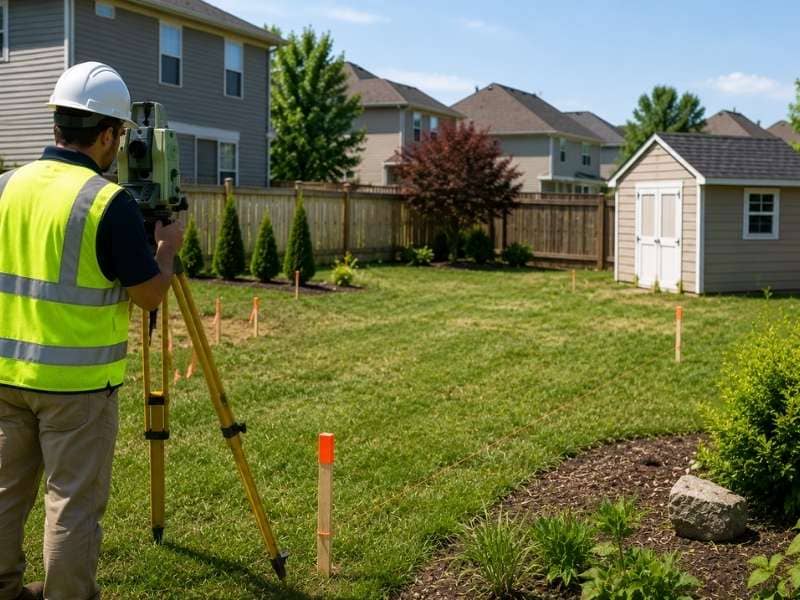
Residential land survey in a backyard showing property markers and measurements before building a fence, shed, or home addition.

Most homeowners don’t think about a survey until a project is already started. By then, the delay had already begun. A residential land survey done before construction can catch problems early. Missing corners, unclear lines, old records, and permit requirements can all stop a project. Finding these issues early is much easier than dealing with them after a contractor is already scheduled.

Missing Corner Markers Can Stop a Project Before It Starts

Corner markers show exactly where property lines meet. On older lots, those markers are often gone. Original iron pins or concrete posts set when the neighborhood was first built can get buried, paved over, or removed during yard work over the years.

When corners are missing, homeowners have no way to know exactly where their property lines are. Building a fence without confirmed corners means guessing. A fence built even a few inches onto a neighbor’s property creates a problem that costs time and money to fix. A residential land survey finds or replaces those corners so the project starts in the right spot.

Neighbor Disagreements About Property Lines Can Cause Delays

Disagreements between neighbors about where a boundary sits happen often. One homeowner thinks the line runs along an old fence. The neighbor has a different idea based on something a prior owner told them. Neither of those is a legal answer, and when one of them tries to build, the conflict shows up fast.

A residential land survey gives both sides something real to work from. It shows where the line is based on official records and field measurements. Starting a fence or addition without that information is a risk that often causes delays when a neighbor pushes back mid-construction.

Local Rules Can Limit Where a Structure Can Go

Local rules set minimum distances that structures must sit from property lines. These are called setbacks. A fence might be allowed close to the line, while a shed or addition needs to sit several feet back. Some homeowners associations have their own rules on top of local ones.

Without a current survey, homeowners don’t know exactly where their lines are. That makes it hard to confirm whether a planned structure meets the required distances. A survey gives the exact line locations needed to plan the project correctly. This helps avoid a permit rejection because the structure was placed too close to the line.

Old Property Records Can Point to the Wrong Location

Many residential lots have deeds and survey records that are very old. Some older records use reference points that no longer exist. A tree used as a corner marker may be gone. A road mentioned in the deed may have been moved years ago.

Relying on old records without checking them can send a project in the wrong direction. A homeowner who builds based on an old map may find out later that the information didn’t match current conditions. A current residential land survey checks what’s on the ground today against the recorded description. It finds any gaps before they become construction problems.

Missing Survey Documents Can Slow Down a Permit

Some permit applications require survey information before they move forward. A city or county building office may ask for a site plan that shows confirmed property lines. A homeowners association may need survey details before approving a new structure. Without a current survey, the application stalls while the homeowner tries to get one under time pressure.

Having a current residential land survey ready before submitting a permit saves time. It gives the reviewing office what it needs to process the application without sending it back. That can save weeks on a project that already has a contractor scheduled and materials ordered.

Frequently Asked Questions

What is a residential land survey?

A residential land survey shows where property lines and corners are located on a lot. It gives homeowners verified measurements based on field work and official records.

Why do I need a residential land survey before building a fence?

A survey confirms exactly where the property lines are so the fence gets built in the right place. Without it, there is no reliable way to know if the fence crosses into a neighbor’s property.

Can a residential land survey help with a shed or home addition?

Yes. A survey shows the exact property line locations needed to confirm that a planned shed or addition meets the required setback distances before construction starts.

Do I need a new residential land survey if I already have an old one?

Possibly. Older surveys may not reflect changes that have happened over time. A current survey gives accurate, verified information based on present conditions.

Can a residential land survey help settle a property line dispute?

Yes. A survey shows where the property lines are based on official records and field measurements. That gives neighbors a clear, factual answer to boundary questions.
Land Surveying Steps Buyers Should Take Before Closing on Rural Acreage

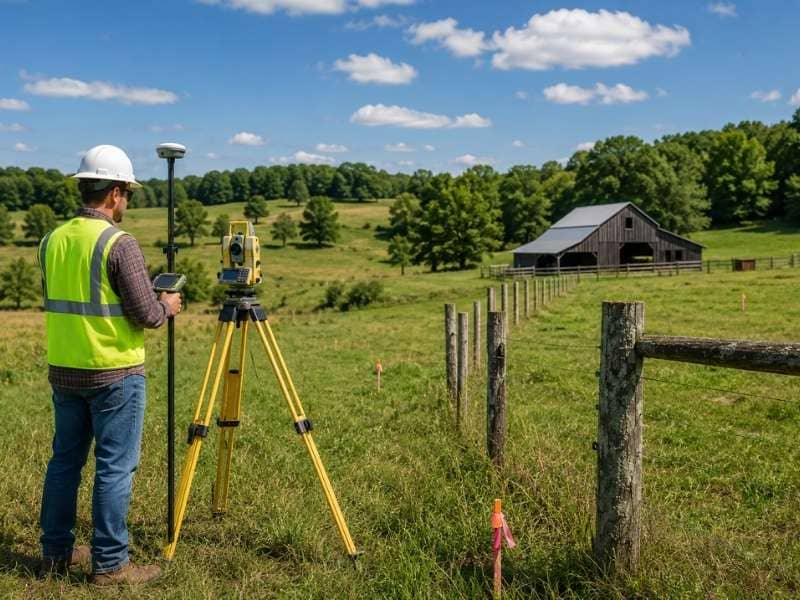
Land surveying on rural acreage with a surveyor measuring fence lines and property markers before closing.

Buying rural acreage is different from buying a house in a subdivision. The land is bigger, the boundaries are less obvious, and the details that matter most don’t show up in a listing. Land surveying gives buyers a clear picture of what they’re actually purchasing before the closing date arrives. Skipping it on rural property is one of the more expensive mistakes a buyer can make.

Check Property Lines Before You Buy

Rural properties often have long boundaries that run through wooded areas, across fields, or along creeks. Without a survey, buyers have no way to know exactly where those lines are. A listing may show a rough acreage number, but it won’t tell you where one owner’s land ends and the next one begins.

A land surveying professional places markers at the boundary corners and produces a map showing the exact lines. That information tells buyers what they’re getting and protects them if a neighbor ever questions where the property ends. On rural land especially, confirmed boundary lines are worth far more than assumptions.

Find Out if Anyone Else Has Rights to Use the Land

Owning land doesn’t always mean exclusive use of every part of it. Easements give other people or organizations legal rights to cross or use portions of a property. Utility companies may have the right to run power or gas lines through the land. A neighbor may have a recorded right to use a shared road that crosses the property. Access easements can affect where a buyer can build and what changes they can make.

A survey identifies these rights and shows where they sit on the property. Some easements are narrow and have little impact on everyday use. Others run through the most useful parts of the land and significantly affect future plans. Buyers deserve to know about all of them before closing, not after.

Make Sure Fences and Buildings Are in the Right Place

Rural properties often have fences, barns, sheds, storage buildings, and other structures. The important question is whether all of those features sit inside the property lines. Not every fence follows the actual boundary. Not every barn was placed with a survey in hand.

A land survey shows exactly where existing structures sit relative to the property lines. If a fence cuts inside the true boundary, the buyer may be getting less land than they think. If a barn sits partially outside the property line, it becomes a problem at closing or later when the buyer tries to sell. Finding these issues before closing gives buyers and sellers time to resolve them without pressure.

Confirm the Size and Features of the Property

An acreage number in a listing is a starting point. A survey gives buyers the verified measurement. On rural land, the difference between what a listing says and what a survey finds can sometimes be significant, especially on older parcels where the deed description hasn’t been checked against modern measurements in years.

Beyond the acreage, a survey can show features that affect how the land can be used. Creeks and drainage corridors affect where buildings can go. Wooded sections, open fields, and changes in terrain affect how the land performs for farming, hunting, or development. Knowing where those features sit on the property helps buyers plan realistically before they close.

Use Survey Results to Help With Closing

A completed survey is useful for more than just the buyer. Lenders often require a survey before approving financing on rural acreage. Title companies use survey information to confirm that the title is clear and that there are no boundary or encroachment issues that could affect the transaction. Having an accurate, current survey ready early in the process keeps things moving.

When survey results reveal an issue, addressing it before closing is far easier than addressing it after. A boundary discrepancy, an undisclosed easement, or a structure outside the property lines can all be worked through when there’s time and room to negotiate. Waiting until the last minute leaves buyers with fewer options and more pressure to accept terms they might otherwise question.

Frequently Asked Questions

Why is land surveying important before buying rural land?

A survey shows buyers where the property lines are, how much land they’re actually getting, and whether any easements or boundary issues could affect the property after closing.

Do I need a new land survey if the seller already has one?

Possibly. An older survey may not reflect recent changes to the property, new structures, or updated boundary information. A current survey gives buyers verified data based on present conditions.

Can land surveying show if there is a shared road or easement?

Yes. A survey identifies easements, shared access roads, and utility corridors that give other parties legal rights to use part of the property. Buyers should know about these before closing.

How long does land surveying take for rural acreage?

It depends on the size of the property and the terrain. Larger or heavily wooded tracts take more time to survey than smaller, open parcels. A surveying professional can give a time estimate based on the specific property.

Is land surveying worth it for vacant land?

Yes. Undeveloped land can still have boundary questions, easement issues, or structural encroachments from neighboring properties. A survey gives buyers the information they need to make a confident decision.

The Importance of Land Surveying in the Modern World

land surveyinngMost of you have probably never thought about land surveying until you needed it at some point. Many of us hear about land surveying all the time but never really give it much thought.

Since an investment in land and/or a home will likely be the largest investment you will ever make in your lifetime, knowing where your property lines are becomes very important indeed.

The art of land surveying was developed centuries ago. In fact, it’s one of the oldest professions in the world. The fact that it was used by man at such an early time and is still being used now shows how important surveying is to our survival.

Surveying land has many uses. Boundary surveying, for instance, allows you to know where your property corners or property lines are. This is especially helpful when disputes with a neighbour or with other people arise in terms of where your property ends.

If your family wants to divide a tract of land and transfer ownership to other family members, a boundary survey is the first step to do so. If you’re having a building constructed, it is very important that you have the land surveyed to make sure that you are not encroaching onto other peoples’ property.

A mistaken building location is very expensive to fix so you might as well invest in a boundary survey to prevent this.

"Land Surveying saves money, time, lives, and properties''.

A topographic survey, or topo survey for short, is another important type of land surveying. A topo survey is done to locate natural and man-made features on a particular parcel of land.

A topographic survey is different in that the elevation of the land is surveyed which means it can show man-made underground features, retaining walls, utility lines and etc.

Before you start any kind of construction activity, it’s important to have a topo survey done in the area so they’ll have an accurate record of the land’s existing conditions. Yes, that spot with the new mall in the neighbourhood had to have a topo survey done first.

Now, a flood survey or flood determination – this is very important too. It isn’t evident just looking at a property whether you are at risk of flooding or not. And, in some cases, even looking at the flood maps doesn’t give you an accurate answer.

The flood survey determines the elevation of the home and compares that to the base flood elevation. This is the only way to be sure you’re not in a flood hazard zone. If you’ve just been told that you live in a flood-prone area, having that confirmed by a professional land surveyor would let you know how to best proceed.

When getting flood insurance, insurance companies would require an elevation certificate from you. A land surveyor would be able to assist you with this.

If a company wants to invest in another state, or if there is a national lender on a commercial project, they will likely need an ALTA Land Title Survey done before anything is constructed. An ALTA Land Title Survey is a lot like a regular boundary survey except that nationally accepted ALTA Standards are used to guide the surveying effort.

Land surveying standards vary widely from state to state and an ALTA Land Title Survey is used to cut down on this variation. Also, an ALTA Land Title Survey typically is more involved than the state standards variety.

Because of this, an ALTA survey can be more anywhere from 50% to 200% more expensive than using the state standards only. If you need this type of survey, I suggest seeking an experienced land surveying company who is familiar with these additional requirements.

In summary, there are many uses for a land survey and for seeking the services of a land surveyor. If you’re unsure of your situation, consult Enterprise Land Surveying at (888)-936-8426 today or go to the Contact page and send us an email.